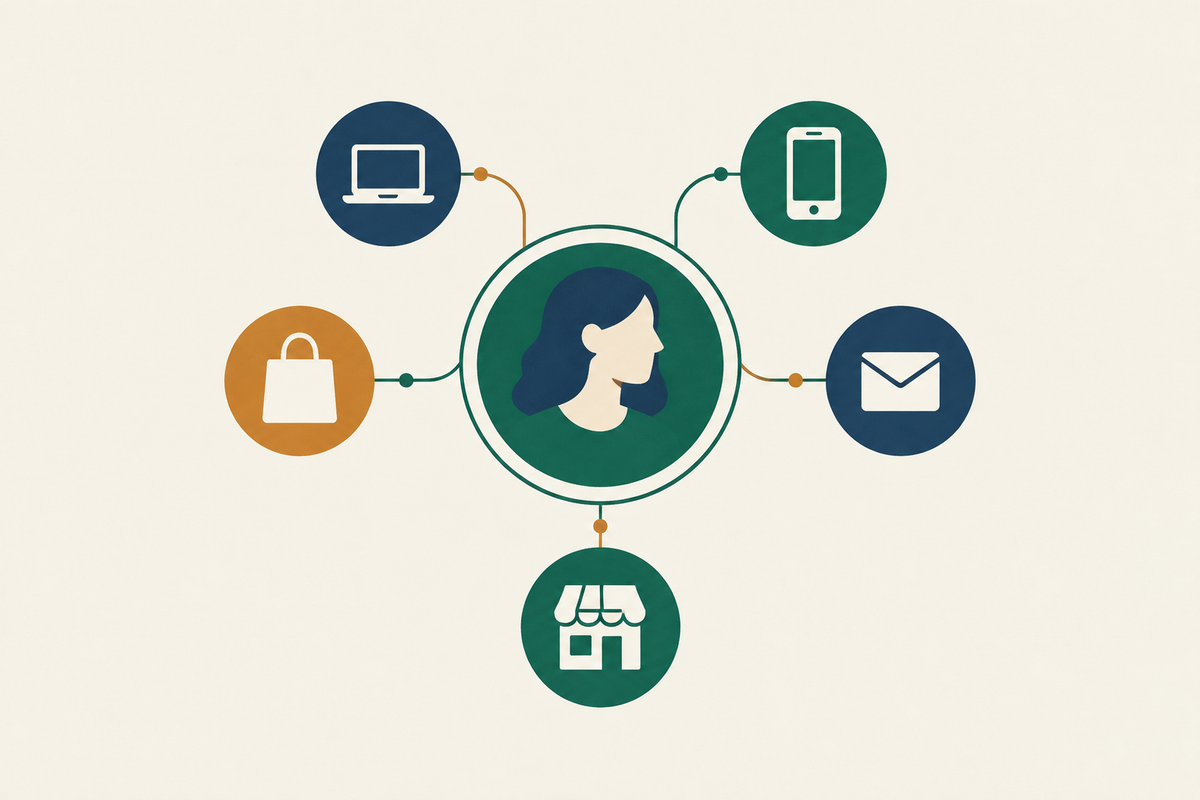
First-Party Data Collection After Third-Party Cookie Deprecation
Brands need to own customer data directly because platform tracking is already broken beyond repair.

First-party data collection is a structural requirement for DTC measurement. Attribution had already degraded through Apple’s tracking restrictions, Safari, and ad blockers. The durable response is to repair conversion collection, build consented customer identities, and earn information directly from shoppers. Those assets grow more useful with each purchase, preference, and interaction in a way that rented tracking does not.
Why attribution already broke before Chrome made up its mind
Google reversed its third-party cookie deprecation plans in July 2024 and said in April 2025 that it would not force-deprecate them. That reversal did not repair attribution. Safari introduced Intelligent Tracking Prevention in 2017 and blocked all third-party cookies by default from 2020, while Firefox introduced restrictions in 2019. Chrome’s decision left these existing gaps untouched.
Apple’s ATT framework created the larger attribution problem. Opt-in rates sit at roughly one-quarter to one-third of iOS users, leaving much of that traffic unmeasured by platform APIs. Ad blockers and consent rejections further reduce what browser pixels capture. Brands therefore need to address gaps in collection before debating attribution models.
Meta also changed the basis for historical comparisons. On January 12, 2026, it deprecated its 7-day view and 28-day view attribution windows, leaving 7-day click and 1-day view as the default. In March 2026, it separated non-link interactions into a 1-day engage-through category. Brands comparing ROAS with pre-2026 results are therefore comparing incompatible windows. A practical diagnostic comes first, however. If analytics records fewer conversions than the CRM records as customers, the collection layer needs attention before optimization.
Why the gap between what platforms report and what actually happened is structurally large
Missing conversions do more than weaken a report. When a blocked pixel or an opt-out prevents Facebook or Google from receiving conversion data, automated bidding and audience targeting operate on partial information. The platform cannot optimize from the full set of outcomes the brand records. Collection quality therefore affects campaign performance as well as the ability to assess it.
Incomplete signals can coexist with inflated attribution. View-through crediting, attribution windows, and missing event deduplication can make a campaign appear stronger than its contribution to revenue warrants. Without deduplication, the same purchase can get conversion credit more than once. A marketer reporting higher Meta ROAS may consequently be performing worse than one reporting a lower figure.
The distortion then feeds back into budget allocation. Campaigns that get too much credit get more money, while campaigns that work well but look weaker in reports lose funding. Platforms also give more credit to conversions that happen entirely within their own ecosystem. This makes in-platform performance a less reliable proxy for DTC revenue and establishes the need for a collection layer that the brand controls.
What first-party data actually is and what it is not
First-party data includes consented emails, purchase history, behavioral events, and declared preferences collected through the brand’s direct customer relationship. First-party cookies are set by the brand’s own domain and store information such as logins, preferences, and session behavior. The underlying customer records need not depend on a cookie remaining available.
Collection captures an event, identity connects it to a customer, and activation sends the appropriate signal to a channel. These are three different operational problems. Having an email database does not establish that ad platforms receive complete purchase signals or that records from different sources resolve to the same person.
Klaviyo illustrates the distinction without making it a product shortcoming. Its server-side order events work for its own platform and do not send conversions to Google Ads, Meta’s Conversions API, or TikTok Events API. Its browser-based browse and cart events remain exposed to browser limitations. Its identity capabilities serve a different purpose. The Klaviyo–Meta integration continuously syncs email segments as Custom Audiences, with updates appearing within a day or two, supporting purchaser suppression and higher-quality lookalike seeds.
The four first-party data stacks DTC brands are actually running in 2026
The four approaches are Klaviyo-centered, HubSpot-centered, Segment with a warehouse and reverse ETL, and custom server infrastructure. The choice depends on present operating capacity. For Shopify-centered brands, Klaviyo handles Shopify-sourced volume and supports retention and native activation. It has limits when non-Shopify data needs to join the customer record, especially when records from several sources must resolve to the same person. Fast activation does not solve that joining problem.
HubSpot also brings these tools together, with activation that can take less than a minute specifically within its native operations. Its constraints include monthly event limits at both Pro and Enterprise tiers and identity resolution that becomes harder beyond two or three sources. A team assessing it needs to distinguish a manageable customer workflow from a more demanding multi-source data system.
Segment with a warehouse and reverse ETL supports arbitrary source counts, but the data team must write and maintain the identity-resolution logic. Flexibility brings an ongoing engineering obligation. High volume also puts pressure on Segment’s usage-based pricing, while reverse-ETL latency is structurally minutes-to-tens-of-minutes. That makes this approach a poor fit when audience updates must arrive in less than five minutes, despite its strength in joining sources.
Custom servers can scale horizontally to handle more volume. Across these approaches, event volume, identity complexity, and activation speed expose different constraints, so no single capability establishes overall fit. The lesson for mid-market teams is to choose for the people and requirements they have today.
How to close the server-side gap on Meta and Google today
For most DTC brands, the highest-leverage first fix is Meta’s Conversions API running with the existing pixel. It does not replace the browser installation. CAPI sends conversion signals in parallel, filling gaps left by ITP and ad blockers while deduplication reconciles overlapping events. The purpose is to recover visibility into purchases the platform is already helping generate.
Deduplication must be part of that implementation from the start. Otherwise, the browser and server can report the same purchase as separate conversions, replacing undercounting with inflated performance. The immediate measurement test is whether the gap between platform reporting and CRM records narrows. A larger event count alone is not evidence of a better implementation.
Google’s Enhanced Conversions applies the same first-party matching principle. Hashed customer information, such as email addresses and phone numbers, helps the platform do a better job of attribution and bidding optimization. Using server-side events with customer lifetime value signals gives bidding models a fuller view of what happens with customers. For Shopify brands, CAPI through the Shopify backend or tools such as Elevar or Littledata serves ad-platform conversion collection independently of Klaviyo.
What to collect directly from shoppers and how to earn it
Repairing collection restores visibility into behavior, but declared data explains the reasons behind it. Preferences, quiz answers, stated use cases, and post-purchase responses do not depend on cookies or pixels for their accuracy. Shoppers need a reason to provide them. A product recommendation quiz earns preference and intent data by helping someone find the right product at the moment they need guidance.
Post-purchase surveys collect things a pixel cannot tell a brand, such as how shoppers found it, why they bought, and how happy they were with the purchase. When shoppers create an account or join a loyalty program, brands can use progressive profiling to gather information gradually over time. Email and SMS opt-ins also need a clear exchange. Content, early access, and help learning about a product can give shoppers that value, so every invitation need not come with a discount.
A shopper’s skin type, dog’s weight, or running pace can improve later recommendations, email relevance, and replenishment timing without additional tracking. Consent supports that direct relationship. Explicit consent makes the basis for collection more defensible under privacy rules such as GDPR and CCPA, rather than treating permission as an obstacle to data acquisition.
On-site questions provide a different kind of declared information. They reveal missing product content, objections that prevent purchases, and the words buyers actually use. The recommended response is to feed those questions into merchandising, product content, FAQ language, and trigger logic. Each interaction then improves more than a customer profile. It also improves the information available to subsequent shoppers.
That same process strengthens structured product data, another asset the brand owns and controls. AI shopping surfaces read product information. Schema.org Product markup provides the foundation, but incomplete brand linkage, missing availability, absent review aggregates, and missing identifiers such as GTIN weaken that foundation. Most Shopify themes output incomplete schema by default, so a polished storefront is not evidence of complete product data.
Product descriptions must also answer conversational buying questions. Shopper questions provide the language for that work. Structured data and useful answers work together, and review velocity and aggregate ratings help AI judge what to trust when making recommendations. Clean markup alone cannot make up for too few reviews or low average ratings.
How AI-referred traffic changes what first-party data needs to capture
A shopper may choose a product with ChatGPT’s help, then return during a sale through email or a direct visit. Last-click attribution credits only the final visit. The measured share of AI-referred revenue is therefore a lower bound on its influence.
This pattern changes what brands need to ask. Post-purchase surveys can capture AI-assisted discovery that session attribution misses, giving the customer an opportunity to describe how the decision began. Joining declared discovery with purchase history also helps distinguish first-time customers from returning buyers, an important distinction when much AI-referred revenue comes from new customers.
The storefront remains the collection point when an AI-assisted shopper arrives to buy. Its role extends beyond recording a referral. On-site questions can show what remains unresolved after off-site research, while purchase motivation and declared preferences help the brand serve the customer after checkout.
Building a measurement stack that compounds rather than depreciates
Server-side conversion signals give Meta and Google more complete inputs for bidding and audience targeting. Owned identity then supports a different return. Purchase history, declared preferences, and behavioral signals make email and SMS more relevant, while suppression of recent purchasers reduces wasted prospecting spend.
Questions asked on-site help brands improve descriptions and FAQs, and structured product records help AI surfaces understand what is for sale. These assets reinforce one another through use. A customer answer can improve a recommendation today and strengthen the content that helps another shopper discover the product later.
The corresponding measurement framework prioritizes conversion rate, customer acquisition cost, customer lifetime value, and average order value. Platform ROAS alone cannot establish the effect. The recommended standard for reporting AI-driven or data-strategy-driven revenue impact is comparison with the brand’s own baseline, using engaged-shopper cohorts. That keeps the assessment grounded in customer and revenue records rather than inheriting the attribution distortions of a platform dashboard.
Historical depth is the advantage that cannot be recovered immediately. Brands that built email lists, CRM systems, and first-party audiences during the cookie-deprecation warnings retained a basis for measurement as tracking degraded. Brands starting now lack those earlier cohorts. Rented tracking provides a snapshot whose usefulness can change with platform policy, while owned customer history provides the baseline against which the next decision can be judged.